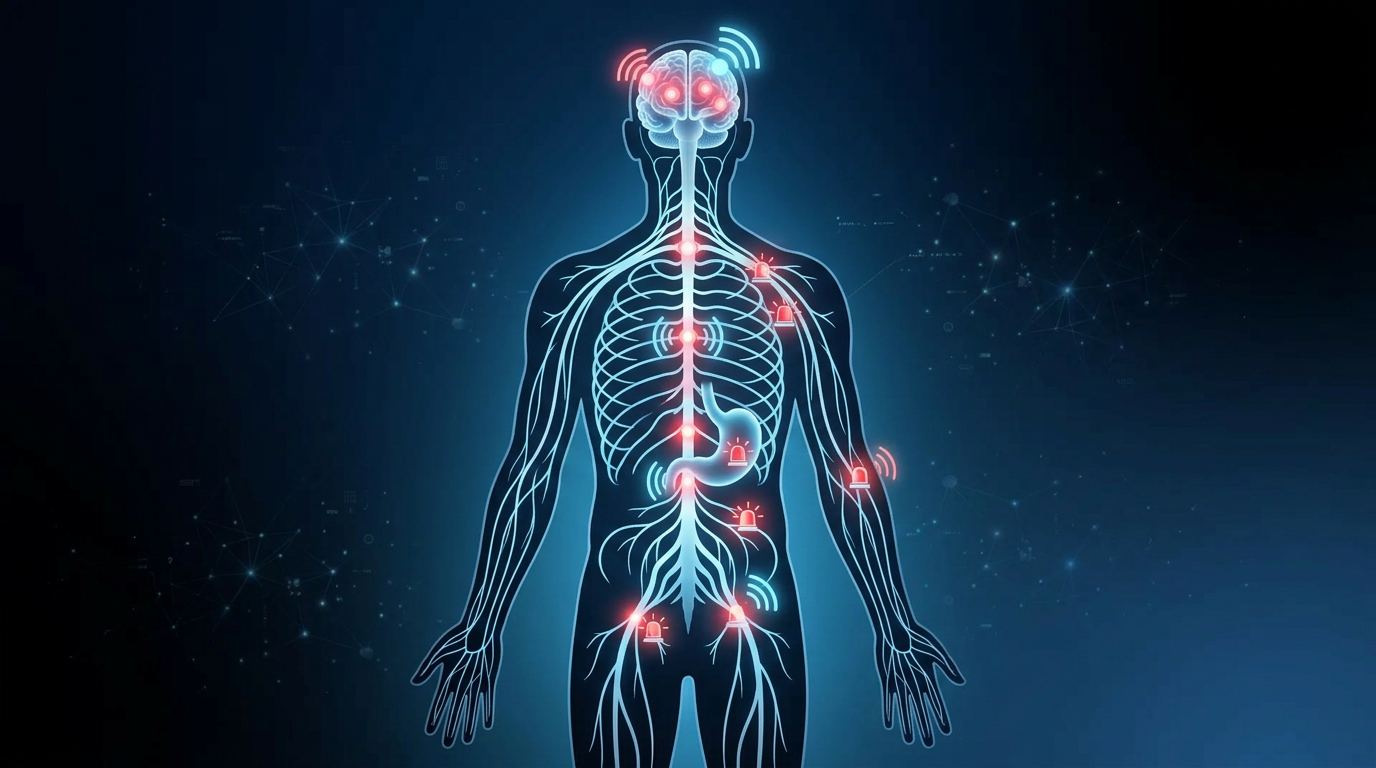
There was a time when survival mode was necessary. Then the threat passed. Or you left. And your body didn't get the memo.
You're still bracing. Still scanning. This isn't anxiety. This isn't overthinking. This is survival mode that never turned off. And now it's running your life.
What survival mode actually is
Your body has systems for danger: hypervigilance, adrenaline, cortisol, emotional suppression, tunnel vision. They were never meant to run indefinitely.
Survival mode should activate, keep you alive, then deactivate when you're safe. Yours didn't. Maybe the threat lasted too long. Maybe you never processed it. Maybe your nervous system learned that vigilance is the only option.
Your body thinks it's protecting you. But it's destroying you.
What it feels like
- Braced for impact even when things are calm.
- Hypervigilant, scanning rooms, moods, outcomes.
- Always behind, achievement doesn't register; threat mitigation never stops.
- Emotions delayed, numb now, flood later.
- Rest feels impossible, downtime feels like dropping your guard.
- Hyperactive or shut down, no middle ground.
- Small things feel catastrophic, system already maxed out.
- Disconnected from your body, hunger, pain, exhaustion overridden until you crash.
- You don't trust that things can be okay, safety feels temporary.
Why you're still in it
- The threat lasted too long, no reset.
- You never processed the original threat, unmetabolized trauma.
- Your environment is still unstable, activation isn't wrong.
- Vigilance worked once, your system won't let go.
- No model for safety, calm isn't recognizable.
What life feels like after
- Calm without waiting for disaster
- Rest without guilt; you notice body signals
- Small disruptions don't automatically equal crisis
- Emotions arrive in real time more often
- Trust without controlling everything
- No constant bracing; baseline stops feeling like chaos
How you get out
You can't think your way out. You teach your nervous system somatically that the threat is over.
- Regulate in real time, breath, movement, temperature, grounding.
- Process unmetabolized trauma, complete stress cycles.
- Reality-test, past threat vs present reality.
- Rebuild baseline, teach calm incrementally.
- Stop overriding signals, honor limits.
- Create actual safety, sometimes circumstances have to change.